
Water Directed Away from Structures Permanently
Drainage Solutions in Clarksville for properties with standing water, saturated yards, foundation moisture, or runoff that pools near buildings
Clarksville's clay-heavy soils drain slowly, causing water to pond in low areas after storms and saturate ground near foundations where it creates hydrostatic pressure against basement walls or crawl spaces. Rock Excavation LLC installs drainage solutions in Clarksville, excavating channels for French drains, grading yards to redirect surface flow, and installing catch basins that capture runoff before it reaches problem areas. Drainage systems move water from where it causes damage to locations where it disperses harmlessly into soil or connects to storm drains.
This work involves identifying where water collects, determining the elevation changes needed to establish positive drainage away from structures, and excavating trenches or swales that carry water along a controlled path. French drains use perforated pipe surrounded by gravel to collect subsurface water, while surface grading reshapes yard contours so runoff flows away from foundations before it infiltrates soil.
Request a detailed estimate based on current drainage patterns and problem areas identified during a site visit.
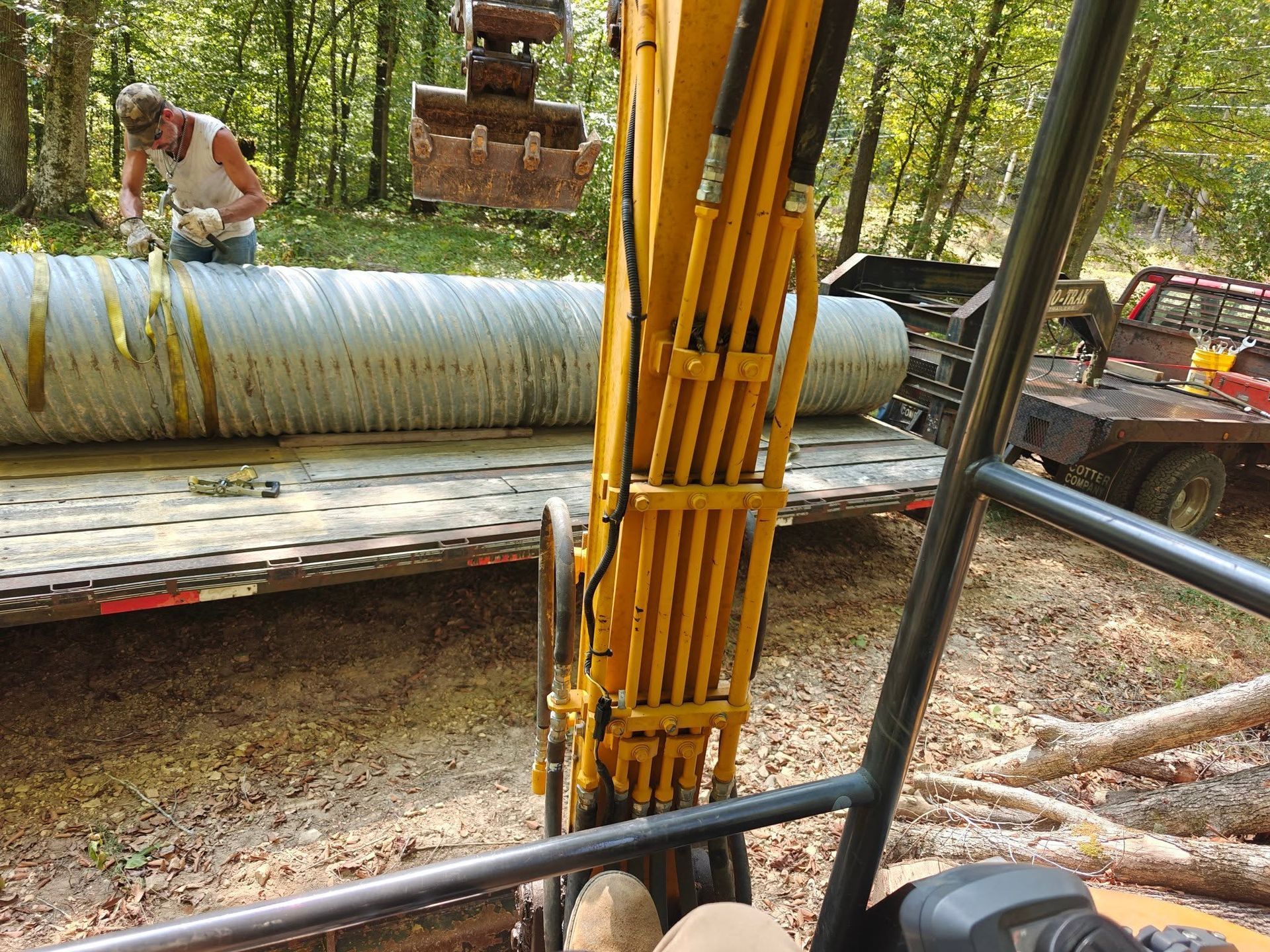
What You Notice Once Drainage Systems Are Finished
Drainage installation requires excavating trenches at calculated grades that allow gravity to pull water downhill toward discharge points, placing perforated pipe in gravel-filled trenches for subsurface drainage, or reshaping yard elevations to create surface slopes that direct runoff away from buildings. Catch basins are installed at low points where water naturally collects, capturing runoff and channeling it underground to discharge locations. Grading work removes high spots that block natural drainage and fills depressions where water ponds.
After installation, water no longer stands in your yard for days after rain, and the ground near your foundation dries out instead of remaining saturated. Basements stay drier because hydrostatic pressure drops when soil around foundation walls is no longer waterlogged, and crawl spaces stop accumulating standing water that promotes mold growth and wood rot. Surface water flows visibly along the graded paths during storms rather than spreading randomly and soaking into problem areas.
Drainage solutions include ongoing functionality as long as systems aren't blocked by sediment or root intrusion, which is why discharge points are located where they won't erode or clog, and French drain inlets are covered with filter fabric that prevents soil from washing into perforated pipe. Systems designed with proper grade and capacity handle typical storm events without overflow or backup.
Answers to Frequent Service Questions
Property owners dealing with water management issues typically ask these questions before drainage work begins.
What causes water to pool near foundations after rain?
Water pools when yard grading slopes toward the house instead of away from it, or when clay soils drain so slowly that runoff accumulates faster than it infiltrates, creating saturated zones where water has nowhere to go.
How does a French drain remove subsurface water?
French drains use perforated pipe buried in gravel-filled trenches, allowing groundwater to seep through gravel into the pipe and flow by gravity to a discharge point, which lowers the water table around foundations and prevents saturation.
Where does collected drainage water discharge?
Drainage systems discharge to locations where water disperses without causing erosion or flooding—typically to storm drains, drainage ditches, low areas away from structures, or dry wells that allow gradual infiltration into deeper soil layers.
How is yard grading different from installing underground drains?
Grading reshapes surface elevations to control where runoff flows before it soaks into soil, while underground drains collect water that has already infiltrated and move it away through buried pipe systems.
What maintenance do drainage systems require after installation?
Systems require periodic inspection to ensure discharge points remain clear and catch basins are free of debris that blocks water entry, but properly installed drainage typically functions for years without intervention if grades are maintained and inlets stay unclogged.
Rock Excavation LLC addresses drainage problems across residential properties in Clarksville. Schedule a property evaluation to identify water flow patterns and determine which drainage approach fits your site conditions.