
Properties Cleared to Building Standards
Land Clearing in Clarksville for wooded or overgrown properties transitioning to residential construction
Overgrown properties accumulate brush, saplings, and debris that must be removed before site work can establish building pads or utility corridors. Rock Excavation LLC provides land clearing in Clarksville for residential lots where vegetation density prevents access for surveying, grading, or foundation excavation. Clearing removes trees, stumps, undergrowth, and accumulated organic material, then hauls debris off-site to leave a surface ready for the next construction phase.
The service involves cutting and removing standing trees, grinding or extracting stumps to below-grade depth, and using equipment to clear brush and root systems that would interfere with grading or construction access. Material is separated for disposal or recycling, and the cleared area is left free of debris that would obstruct equipment or create hazards during subsequent work.
Schedule a property walkthrough to identify clearing boundaries, tree removal requirements, and material disposal needs before site work begins.
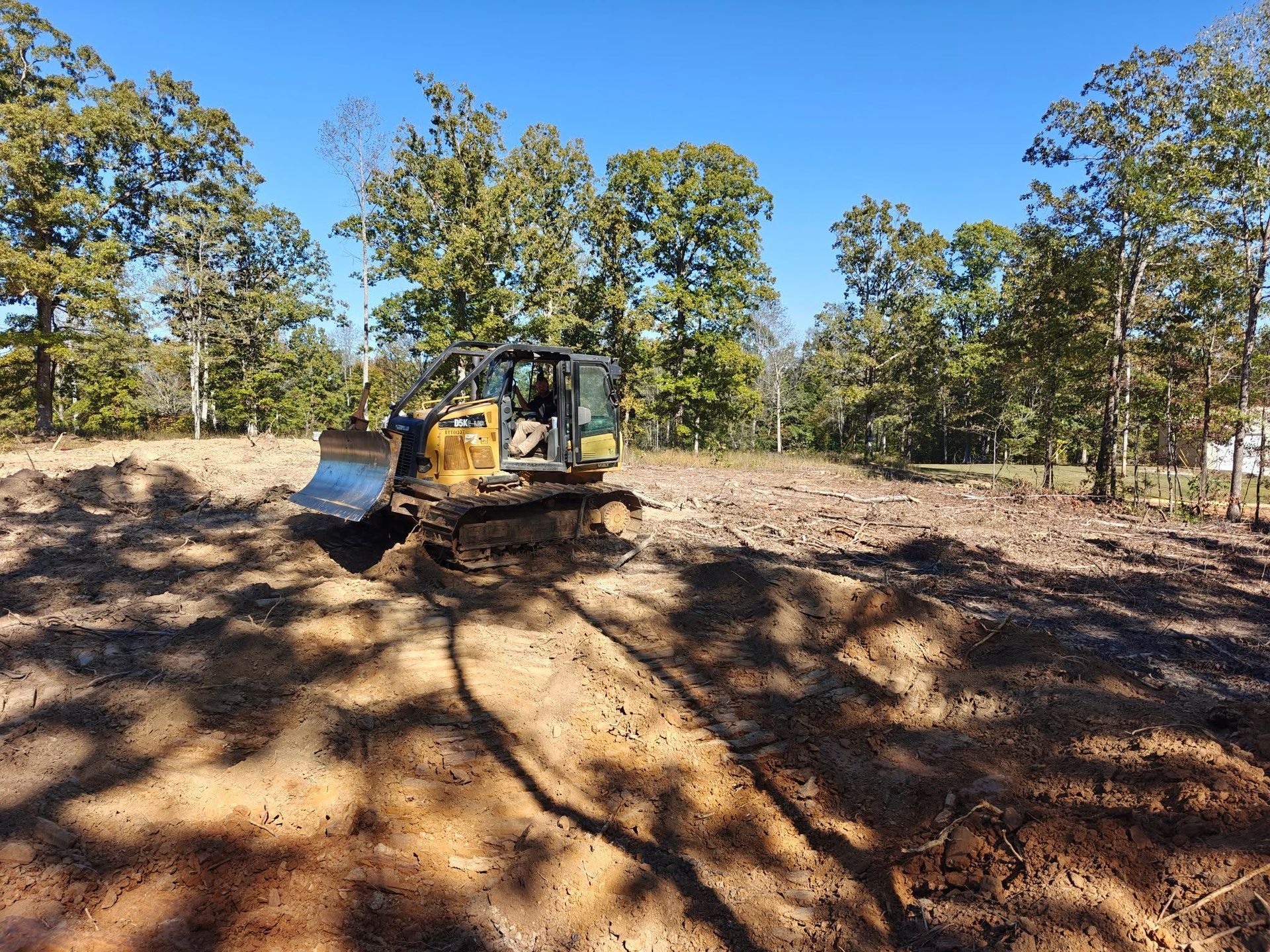
What Proper Land Clearing Includes
Clearing land means removing not just visible growth but also root systems and organic layers that decompose over time, which is why the work extends below the surface to prevent settling or vegetation regrowth in areas planned for driveways, foundations, or landscaping. Equipment removes trees at ground level, then grinds stumps to depths that allow grading equipment to pass without obstruction.
After clearing, the property shows open ground with no standing vegetation, stumps, or debris piles, and the surface is accessible for surveying and site layout. Areas designated for construction or access routes are cleared to boundaries that match permit drawings, and any vegetation intended to remain is protected from equipment damage during the clearing process.
Clearing includes separating recyclable wood material from brush and organic debris, with disposal coordinated based on local regulations and site conditions. Properties with steep slopes or limited access require different equipment and staging plans than flat, open lots, and clearing methods adjust to avoid erosion or damage to adjacent areas.
Questions Before Starting Your Project
Land clearing decisions depend on property size, vegetation density, and intended use after clearing is complete.
What happens to trees and debris removed during clearing?
Material is hauled to disposal facilities, recycling centers, or landfills depending on type, with wood sometimes separated for mulching or other uses if arrangements are made before clearing begins.
How are property boundaries protected during clearing?
Boundary markers are located before work starts, and clearing stops at surveyed lines to avoid encroaching on adjacent properties or removing vegetation outside the permitted area.
What is done with stumps after trees are removed?
Stumps are ground to several inches below grade or fully extracted depending on whether the area will be graded, paved, or planted, with grinding preferred when roots do not interfere with planned excavation depths.
When is the best time to clear land in Clarksville?
Clearing can occur year-round, but drier months reduce the risk of equipment creating ruts or soil compaction, and winter clearing allows better visibility of property lines and terrain before spring growth begins.
What remains after land clearing is finished?
The property shows cleared ground with all vegetation, stumps, and debris removed, leaving a surface ready for grading, excavation, or construction layout without obstructions that would delay subsequent work phases.
Rock Excavation LLC clears residential properties to match construction plans and access requirements, coordinating debris removal and site preparation throughout the project. Arrange a site visit to review clearing boundaries and confirm equipment logistics for your property.