
Trenches Dug to Exact Depth and Grade
Utility Trenching in Clarksville for properties installing underground water lines, drainage systems, electrical conduit, or other buried utilities
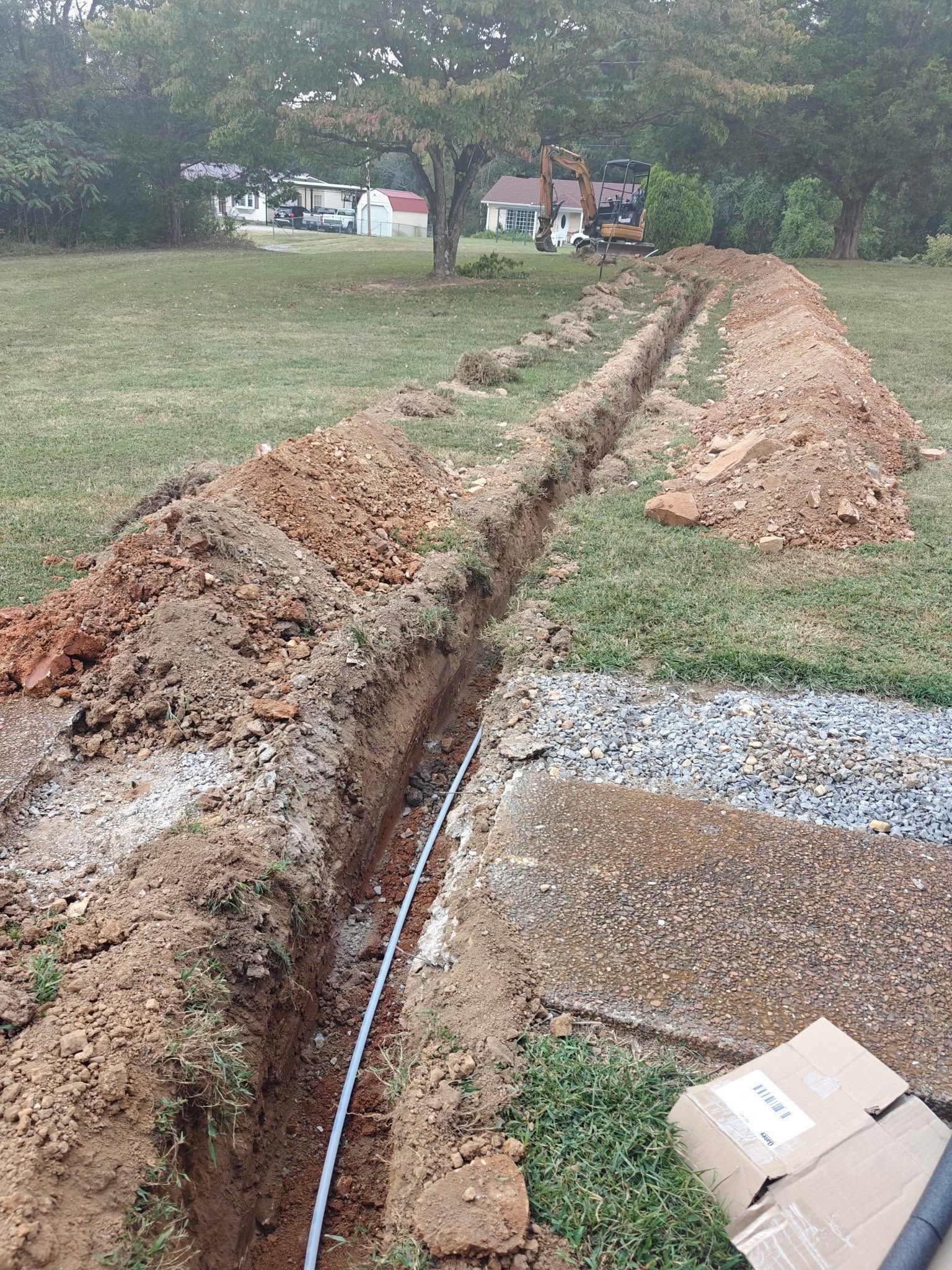
Underground utilities require trenches excavated to specific depths and consistent grades so water flows correctly, electrical conduit meets code burial requirements, and pipes don't settle unevenly after backfilling. Rock Excavation LLC provides utility trenching in Clarksville, digging pathways for water lines, drainage pipes, electrical runs, and other underground installations while maintaining the slope and depth each utility type requires. Trenches cut through clay, rock, or mixed soil without damaging existing underground lines or destabilizing adjacent structures.
Trenching involves marking existing utility locations to avoid cutting into active lines, excavating to the depth required by the utility type and local code, and maintaining consistent grade along the trench length so gravity-fed systems like drainage and sewer lines function correctly. Trench walls are cut vertically in stable soil or sloped in loose material to prevent collapse during installation work.
Arrange an on-site consultation to determine trench depth, routing, and grade requirements for your utility installation.
How Trenching Addresses Underground Utility Installation
Utility trenching begins with locating existing underground lines using utility marking services, which identify where water, gas, electric, fiber, and other buried infrastructure already runs beneath your property. Once existing utilities are marked, trenches are excavated along the planned route at depths that meet code requirements—typically 18 inches for electrical conduit, 24 inches for water lines in Clarksville to stay below frost depth, and variable depths for drainage depending on where the line terminates. Trenches are cut wide enough to allow pipe installation and backfilling without leaving voids that cause settling later.
You're left with trenches that hold consistent grade from start to finish, which matters critically for drainage and sewer lines that rely on gravity flow rather than pumps. Water pools in low spots if the trench grade fluctuates, and pipes installed in uneven trenches settle at different rates, creating future sags where debris collects and clogs develop. Properly graded trenches allow installers to lay pipe at the correct slope without shimming or adding fill under sections.
Site restoration includes backfilling trenches with excavated material once utilities are installed and inspected, compacting fill in layers to prevent future settling, and restoring the surface so grass can be replanted or driveways repaired. Trenches routed under driveways or hardscaping require more aggressive compaction to prevent depressions from forming under vehicle weight.
Common Questions About This Service
Homeowners preparing for utility installations often ask about trenching requirements before excavation begins.
What depth is required for water line trenches in Clarksville?
Water lines are typically trenched to 24 inches deep to stay below the frost line and prevent freezing during winter cold snaps, though depth increases if lines cross under driveways or other load-bearing surfaces.
How is trench grade maintained for drainage lines?
Grade is checked continuously during excavation using laser levels or slope gauges, ensuring the trench bottom drops consistently from the starting point to the outlet without dips or humps that would trap water or create flow restrictions.
What happens if rock is encountered during trenching?
Rock requires breaking with hydraulic hammers or excavating equipment before the trench can continue, which adds time but doesn't prevent utility installation once the rock is removed or broken to the required depth.
How wide are utility trenches excavated?
Trench width depends on pipe diameter and installation method, but most residential utility trenches are cut 12 to 18 inches wide to allow room for pipe placement, bedding material, and hand work without excessive soil removal.
What site restoration is included after trenches are backfilled?
Restoration includes grading the surface level with surrounding areas, removing excess soil, and preparing the trench path for seeding or sod replacement so the excavation line eventually blends back into your yard.
Rock Excavation LLC digs utility trenches for residential properties throughout Clarksville. Schedule a property review to map trench routing and confirm depth requirements for your specific utility project.