
Land Ready for Construction to Begin
Site Preparation in Clarksville for properties converting from raw land to building-ready condition
Tennessee's clay-heavy soil compacts differently than topsoil, and construction schedules depend on sites cleared to proper depth and graded to engineered specifications. Rock Excavation LLC handles site preparation in Clarksville for residential properties where building permits require certified clearing and material removal before foundation work can start. The service removes vegetation, debris, and unsuitable soil layers, then establishes the elevation and compaction levels that structural plans demand.
Site preparation involves removing trees, brush, root systems, and organic material that would decompose under foundations, then stripping topsoil to reach stable subgrade. The work includes hauling away material that cannot remain on-site and verifying that the exposed surface matches the depth and grade specifications in construction drawings.
Schedule a property evaluation to identify clearing requirements and material volumes before construction timelines are finalized.
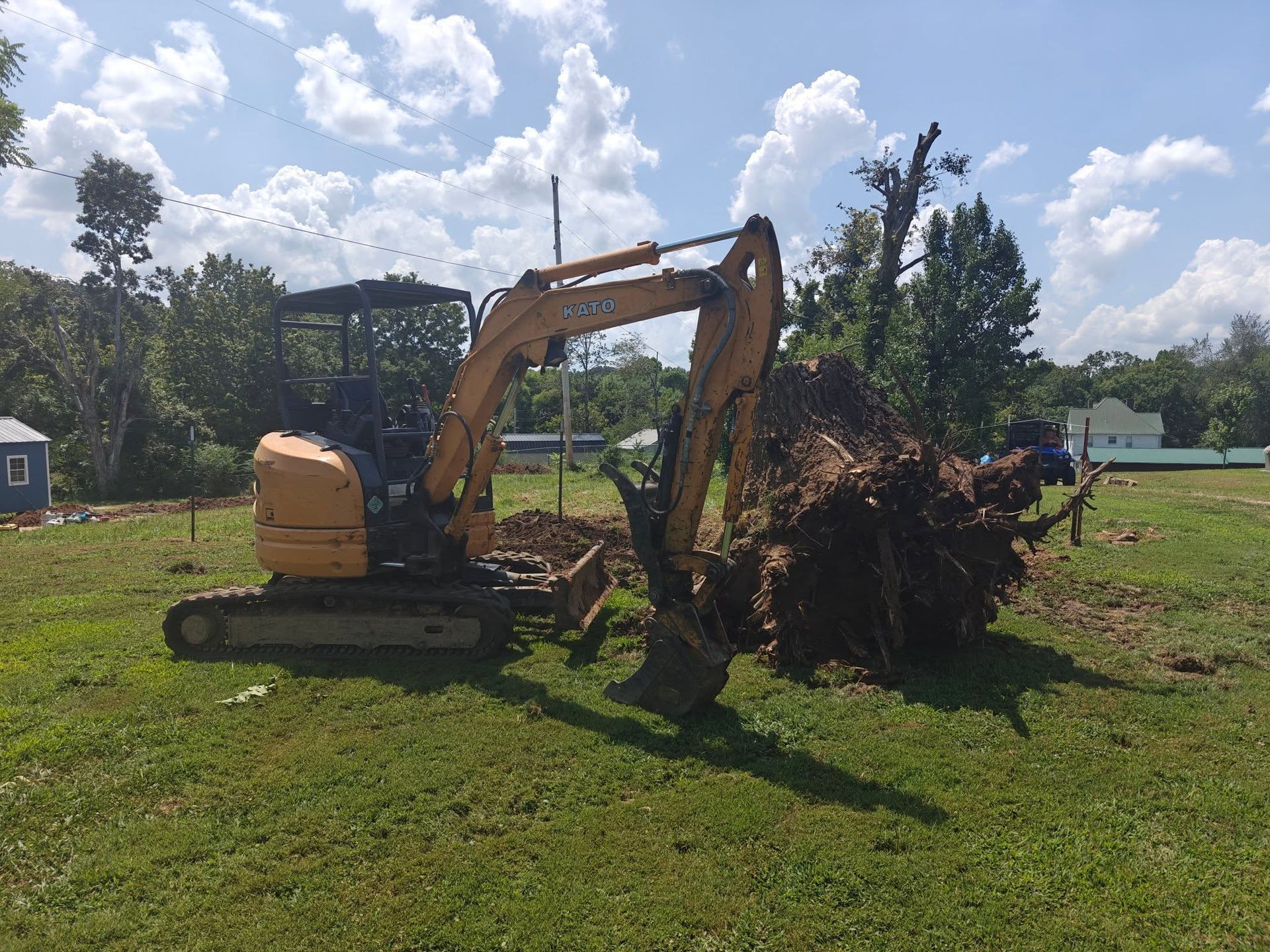
What Proper Site Preparation Requires
Clearing to the correct depth prevents settlement issues that appear months after construction when organic material decomposes beneath slabs or footings. Excavation removes all vegetation and root masses, then strips soil layers until reaching the bearing capacity specified in geotechnical reports or local building codes.
After clearing, the site shows a uniform surface at the planned elevation, with all debris removed and no pockets of loose fill or decomposing material. Boundaries are staked to match survey points, and any material that will remain on-site for backfill is stockpiled in designated areas that do not interfere with construction access.
The scope includes removing stumps below grade, breaking up root systems that extend into the building envelope, and verifying that the cleared area extends beyond foundation lines to provide access for formwork and equipment. Material that does not meet compaction standards is hauled off rather than redistributed on-site.
What Property Owners Usually Ask
Site preparation questions depend on property conditions, permit requirements, and construction schedules.
What happens to material removed during clearing?
Vegetation, topsoil, and debris are typically hauled to disposal or recycling facilities, while some topsoil may be stockpiled for later landscaping if the property owner requests it and space allows.
How is the clearing depth determined?
Depth is based on geotechnical recommendations, soil type, and the structural engineer's bearing capacity requirements, which vary depending on whether the project involves a slab, crawlspace, or basement foundation.
What should be done before site preparation begins?
Utility locates must be completed, property boundaries verified, and any permits secured, since clearing work often requires documentation that the area matches survey descriptions and setback regulations.
Why does clay soil in Clarksville affect preparation work?
Clay retains moisture and expands when wet, so clearing must account for seasonal conditions and ensure that the subgrade is not disturbed during periods when heavy equipment would cause rutting or compaction inconsistencies.
What remains after site preparation is complete?
The site is cleared to bare subgrade at the specified elevation, with all organic material and unsuitable soil removed, leaving a stable surface ready for grading, foundation excavation, or utility installation as outlined in construction plans.
Rock Excavation LLC coordinates with builders and surveyors to confirm that clearing meets permit conditions and construction schedules. Request a site assessment to review clearing requirements and confirm material removal logistics for your project.